

You are the one everyone calls.
When the school has a question, they call you. When your mother has a doctor’s appointment and can’t navigate the insurance paperwork, she calls you. When your father needs someone to speak for him at the hospital, you are the one who shows up. You coordinate the childcare and the eldercare and the work schedule and somehow keep all of it moving, most of the time without anyone fully understanding what that requires of you.
There is a name for this season of life: the sandwich generation. Caught between raising children who depend on you and caring for aging parents who need you, often at the same time, often without enough help, almost always without a plan that accounts for what happens if you can’t hold it all together.
In Black and brown families, in Caribbean and immigrant households, multigenerational caregiving is not unusual. It is expected. It is cultural. It is an expression of love and duty that many of us absorbed long before we had words for it. But love and duty, without legal structures behind them, leave families exposed in ways that surface at the worst possible moments.
This newsletter is for the person in the middle. The one holding everyone up. Here is what needs to be in place to protect the whole family, not just the children, and not just the parents, but you.
Your Parents: The Conversation Most Families Keep Avoiding
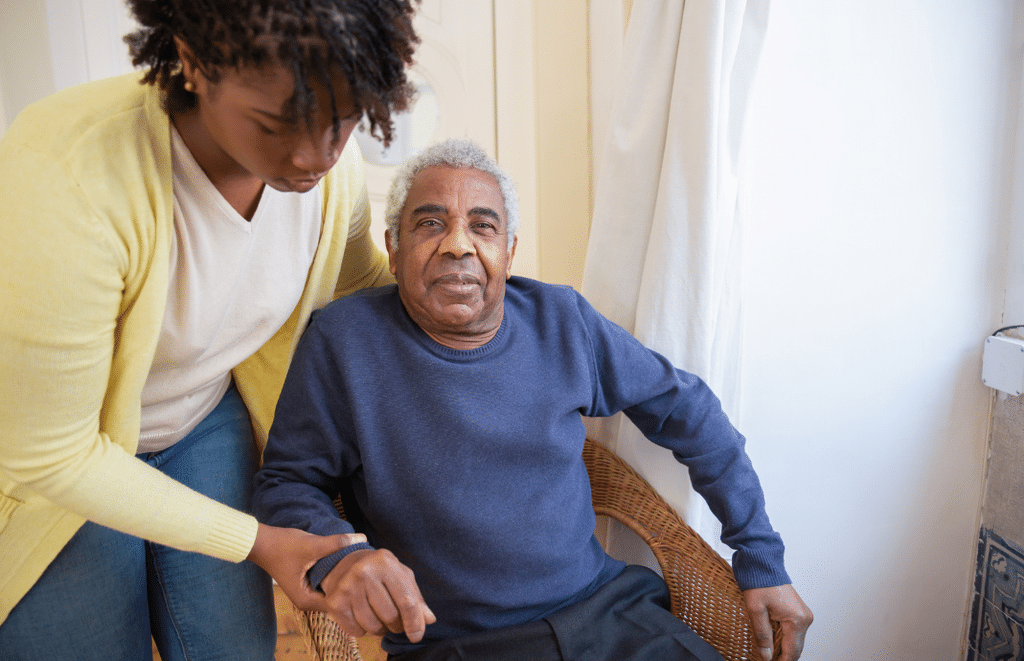
The most common thing I hear from adult children caring for aging parents is some version of this: I handle everything, but I don’t have anything in writing.
They manage the medications and the medical appointments. They are the ones the doctor calls. They know which accounts pay which bills and which sister to call in an emergency. But when a real crisis arrives, the hospital may not recognize their authority to make decisions. The bank may not release funds. A sibling who has never shown up may suddenly have equal legal standing because nothing was ever formalized.
What your aging parents need, and what many families in our community have never gotten around to, is straightforward but urgent:
- A healthcare proxy that names who makes medical decisions when they cannot speak for themselves. Without this document, the hospital follows its own protocols, and the person who has been doing the work of caregiving may have no more legal standing than a family member who lives across the country.
- A durable power of attorney for finances, so the person managing their bills and accounts has actual legal authority to do so, and does not have to go to court for a guardianship or conservatorship when a crisis arrives.
- A will or trust that reflects their actual wishes, not what state law assumes, and that accounts for property, accounts, and assets in the United States and abroad for those who hold them in both places.
- A current, complete record of what they own, where it is held, and how to access it, because the adult child who has been doing everything often discovers after a death that they have no idea where to start.
These conversations are not easy. In many of our families, talking about death or incapacity feels like inviting it. But the alternative is making decisions in a hospital hallway without the legal authority to make them, and sorting out an estate in probate court while still grieving.
If your parents don’t have these documents and something happens tomorrow, you may not have the legal authority to do what you have been doing all along. That gap needs to close before a crisis forces the issue.
Yourself: The Person Nobody Plans For

Here is the part of this conversation that most people in the sandwich generation skip entirely: what happens to everyone if something happens to you?
You are the one managing two households. You are the one with the information, the relationships, the institutional knowledge of who to call and what to do. If you are incapacitated or die without a plan, the system does not pause to recognize that. Your children need a guardian named. Your parents need someone with legal authority to step in for the person who was stepping in for them. Your accounts need to be accessible. Your wishes need to be documented.
Most people in this position have thought more carefully about their parents’ planning than their own. That has to change.
At minimum, here is what needs to be in place for you:
- A will or trust that names guardians for your minor children and directs your assets to the people you intend, not according to the default rules of New York or New Jersey intestacy law.
- A durable power of attorney so someone can manage your finances if you are incapacitated, without a court process that could take months.
- A healthcare proxy and living will that names who makes medical decisions for you and documents what you want, so that your family is not left making those choices without guidance.
- A Kids Protection Plan that gives your designated caregiver immediate legal authority to step in for your children in the hours before any court process can begin, covering the gap that exists even with a properly drafted will.
You cannot protect your parents and your children if the person in the middle is not protected. Your plan is not optional. It is the foundation everything else depends on.
A Note for Our Community

In the families I work with across the New York and the tri-state area, the sandwich generation often carries layers that standard estate planning does not account for.
Parents who immigrated and hold property in the Dominican Republic, Jamaica, Guyana, Haiti, Nigeria, or Ghana alongside whatever they have built here. Parents who never formalized ownership of property back home, or whose assets are informally held in ways that complicate transfer. Grandparents raising grandchildren while the middle generation works. Adult children sending remittances abroad who have never documented what happens to that support if they are suddenly unable to provide it.
Siblings who live in different countries, with different legal rights, who may have competing claims under both U.S. law and the law of the home country. Family members who have been functioning as spouses or parents for years without any legal recognition.
These are not edge cases in our community. They are the norm. And a plan that does not account for the actual structure of the family is a plan that will fail the people who needed it most.
When I work with clients in this season of life, we build a plan that reflects the family as it actually exists. Not a simplified version. Not the nuclear family model that most estate planning software assumes. The real one, with all of its complexity, its cross-border dimensions, and its layers of informal but very real obligation.
Your family is not a standard case. Your plan should not be either.
Your Next Step
If you are caring for aging parents and raising children at the same time, and you do not have a plan that covers both generations plus yourself, this is the right moment to change that.
You do not have to come in with everything figured out. Come as you are, with whatever you already know about your family’s situation, and we will build from there. Most of the time, the gaps are more manageable than they feel when you are carrying them alone.
Schedule your complimentary 15-minute discovery call today. Book your call HERE today!